
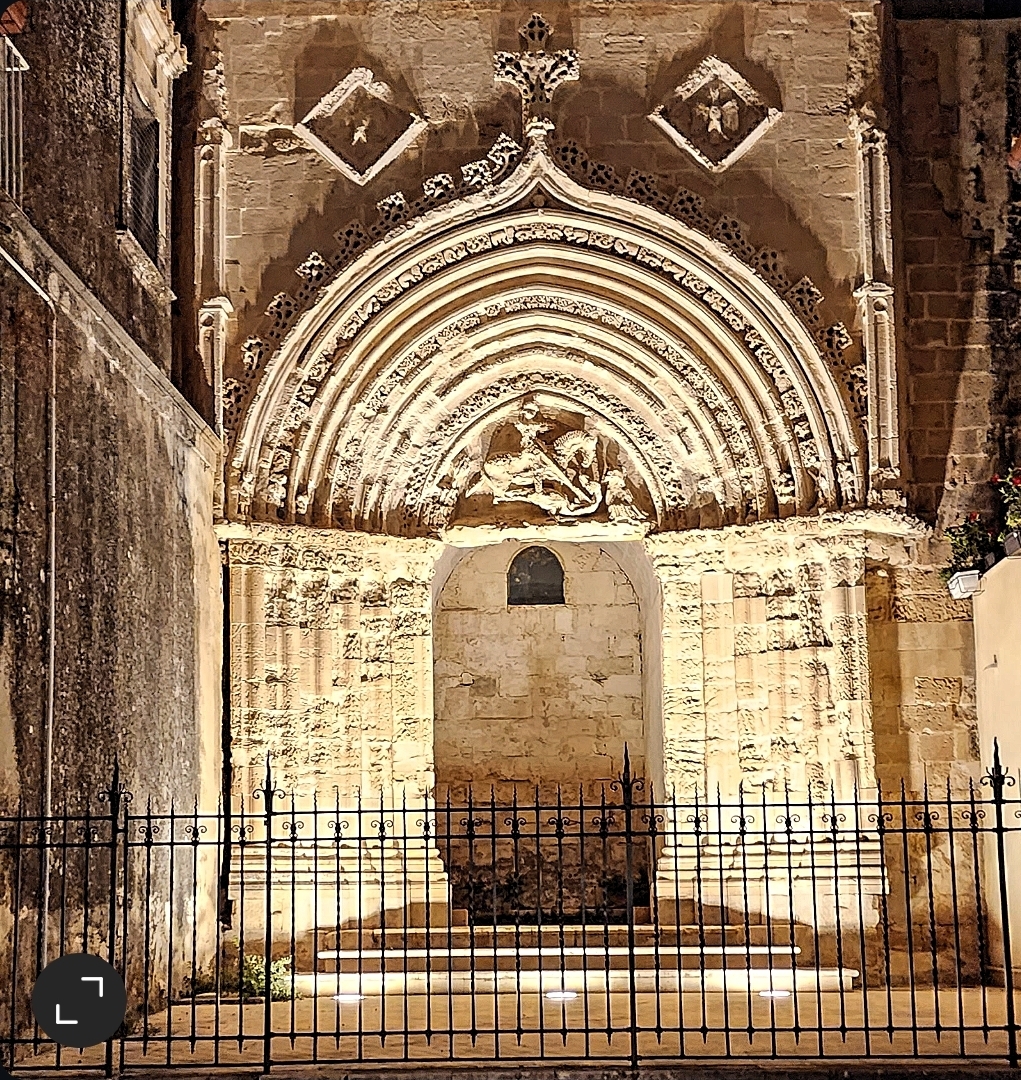

The Portale di San Giorgio or the Portal of Saint George is the only thing that remains of the gothic-style church of Saint George that existed in Ragusa Ibla before the 1693 earthquake. The original church was built in the early 1300s, then modified in the 1500s after it suffered damage from an earthquake in 1542. The massive earthquakes of 1693 finally destroyed the medieval temple of which this doorway was one of three entrances. Ragusans attribute its survival to their devotion to San Giorgio, the town’s patron saint.
The limestone lunette above the archway shows Saint George slaying a dragon with a woman in her dress, kneeling and witnessing the event that defines the saint’s story. The relief pictured illustrates the legend of San Giorgio, who is said to have saved a town from a menacing “dragon” that required daily sacrifices. This scene shows the king’s daughter, who was to be subject of the day’s sacrifice. The “dragon,” of course, is a metaphor for evil or a non-Christian entity.
Saint George grew up in the Middle East devoted to Jesus. The son of a nobleman who had served in the military, George was a well-respected leader in the Roman army until the tyrant Diocletian ordered him tortured and executed in 303 CE because he would not renounce his faith. Legend says that he at first only wounded the dragon and then killed it once the townspeople promised to convert to Christianity.
Ragusa celebrates its Feast of San Giorgio usually in May, even though his official feast day is April 23.
